The Calm Bedroom: How to Design a Room That Helps You Rest
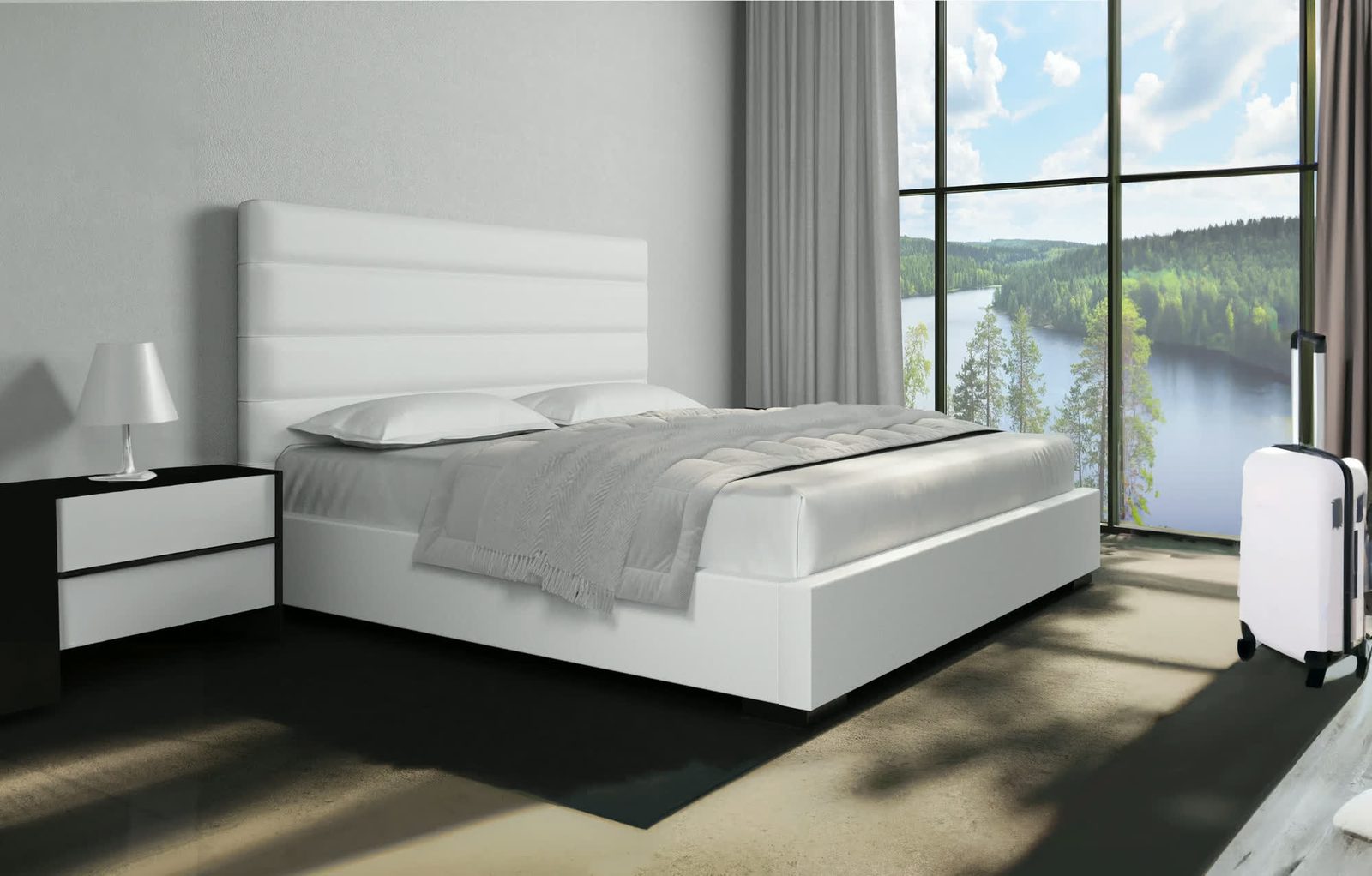
Think about the last hotel room that made you exhale the moment you walked in. Chances are it was not the thread count that did it. It was the room itself: nothing on the floor, a bed that clearly anchored the space, soft light, a palette that asked nothing of you. Most of our bedrooms at home drift in the opposite direction. They quietly collect jobs — office, gym, laundry station, storage overflow — until the room where we are supposed to rest is the busiest room in the house. As the evenings get longer and we head into cozy season here in Toronto, it is the perfect moment to reclaim it. The good news: calm is not a decorating accident. It is a set of design choices, and every one of them is learnable.
Your room is always talking to you
Environmental psychologists have found that visual clutter is not neutral: research published in the Journal of Environmental Psychology links a cluttered home with measurably elevated stress. A busy room keeps your brain doing low-level work — noticing, cataloguing, remembering — exactly when you want it to power down. The reverse is also true. Soft textures, muted colours, warm light, and clear surfaces all send the same quiet signal: nothing is required of you here. Designing a calm bedroom is really just deciding, on purpose, what your room says to you at 10 p.m.
Start with subtraction
Before you buy a single thing, take things away. This is the least glamorous step and the one with the biggest payoff:
- Give the room one job. If you possibly can, move the desk, the exercise bike, and the laundry pile elsewhere. When that is not realistic, contain them: a closed cabinet or a folding screen lets the workday genuinely end at bedtime.
- Clear the floor and the nightstands. A nightstand needs a lamp, a book, and a glass of water. Everything else is a small argument waiting for morning.
- Choose storage that closes. Open shelving displays your to-do list. Drawers and doors keep visual noise behind a clean face — and a platform bed with room for tidy under-bed storage earns its footprint twice.
Choose a quiet palette
Colour psychology research is remarkably consistent: soft, muted, low-contrast tones relax us, while bright and saturated colours keep us alert. You do not need to repaint everything beige. Think of it as lowering the volume: warm neutrals, soft blues, sage greens, gentle greys — and, crucially, fewer colours, repeated. Pick two or three tones and let them recur in the walls, the bedding, and the curtains. A room where the colours agree with each other feels resolved, and a resolved room is a restful one.
Layer the light
Lighting is where good bedrooms most often go wrong. A single bright ceiling fixture floods the room with daytime signals at exactly the wrong hour — evening light exposure delays your body clock and makes it harder to fall asleep. Design your way around it:
- Retire the overhead after dinner. Switch to bedside lamps with warm bulbs, and add a dimmer if you can.
- Aim for pools of light, not floods. Two or three small warm sources create depth and softness that one bright fixture never will.
- Respect darkness. Blackout curtains do double duty in a city like Toronto: streetlight out, morning glare managed, and a noticeably cooler room in summer.
Anchor the room with the bed
Every calm room has a focal point, and in a bedroom it must be the bed. When the bed is an afterthought — a mattress on a metal frame, drifting somewhere off-centre — the room never quite settles. A few principles help:
- Centre it and give it symmetry. A bed placed confidently on its wall, flanked by matching nightstands and lamps, gives the eye a resting place the moment you walk in.
- Keep it low and grounded. A low platform bed leaves air and light above it, which makes ceilings feel higher and rooms feel bigger — a gift in condo-sized bedrooms.
- Let the headboard do the softening. A generous upholstered headboard adds texture, absorbs sound, and turns the wall behind you from hard surface into backdrop. It is the difference between a bed that sits in a room and a bed the room is designed around.
- Choose materials you want to touch. Wood, linen, wool, supple upholstery — natural, tactile materials read as warmth before you ever touch them.
Finish with texture, not stuff
Once the bones are right, resist the urge to fill the space back up. Add depth through layers instead: a knitted throw over the duvet, a rug that is soft underfoot on cold mornings, one plant, one piece of art you love. The test for every addition is simple — does this make the room quieter or louder? If it is louder, it lives somewhere else.
A calm bedroom is not an empty room. It is a room where everything that remains has earned its place.
At Maple Zen, this philosophy is built into our furniture. Our flagship Zazen Bed is designed to be the anchor a calm bedroom needs: a low, grounded platform, clean lines that quiet the room, and a generous channel-stitched headboard upholstered in supple vegan leather — handcrafted in our workshop in Maple, Ontario. If your bedroom is ready to become the most restful room in your home, we would love to help you design it around a bed worth designing around.