The Dark Season: How to Use Light for Better Winter Sleep
This Sunday the clocks fall back, and Toronto begins its long slide into the dark season. By mid-November the sun sets before five, and for a few months most of us leave for work in the dark and come home in it too. You might expect all that darkness to make sleeping easier. For many people, the opposite happens: it takes longer to fall asleep, mornings feel like wading through syrup, and by February the whole rhythm of the day feels slightly off. The culprit, more often than not, is not the darkness itself — it is where the light in our lives has gone.
Your body runs on light
Deep in your brain sits a master clock that decides when you feel alert and when you feel sleepy, and it sets itself by one signal above all others: light reaching your eyes. Bright light in the morning tells the clock the day has started, and it schedules sleepiness for roughly sixteen hours later. Darkness in the evening lets melatonin — the hormone that opens the door to sleep — rise on time.
Winter scrambles both signals. We wake in the dark, spend the brightest hours under office lighting that is far dimmer than even an overcast sky, then come home and sit in bright rooms with glowing screens until bedtime. From the clock's point of view, the day starts late and never quite ends. Research on winter depression found that bright light in the morning pulls the body's melatonin onset earlier — in plain terms, morning light drags your whole sleep rhythm back to where it belongs. The practical lesson works for anyone who sleeps worse in winter: give your body clock a real morning and a real evening, even when the sky won't cooperate.
Mornings: chase the light
The single most useful winter sleep habit costs nothing: get outside within an hour of waking, for fifteen to thirty minutes if you can manage it. A grey November morning doesn't feel bright, but it delivers many times more light than any ceiling fixture — thousands of lux against a few hundred indoors. Walk the dog, walk part of your commute, or simply drink your coffee on the porch with a coat on.
- Put breakfast by the brightest window. If going outside isn't realistic, eat facing the biggest window in the house with the blinds fully open.
- Consider a light therapy lamp. If you're up well before dawn, a 10,000-lux lamp used for twenty to thirty minutes with breakfast is the next best thing to the sky. Position it off to the side, about arm's length away — you glance toward it, you don't stare at it.
- Keep your wake time steady. The morning anchor only works if it lands at roughly the same time every day, weekends included. This weekend's time change is the perfect moment to pick a wake time and hold it.
Evenings: let the house get dim
The second half of the job is giving your evening back its dusk. In the last two hours before bed, step the house down: overhead lights off, warm low lamps on. Bulbs marked 2700K or warmer cast the amber light your body reads as sunset; cooler "daylight" bulbs read as noon, which is the last message you want to send at 9 p.m.
This is where bedroom design and sleep quality genuinely meet. A bedroom lit by a single bright ceiling fixture gives you two options: noon or nothing. A bedroom with layered light — a pair of bedside lamps, perhaps a small lamp on the dresser — lets the room wind down with you. Dim the screens too, or better, leave them outside the door; the evening scroll is bright light and alert attention at exactly the wrong hour.
Night: truly dark, then a gentle morning
Once the lamps go off, the bedroom should be genuinely dark. Streetlights, a neighbour's porch light, even the standby LEDs on electronics are all light your brain registers through closed eyelids. Blackout curtains earn their keep in a city bedroom, and turning charging gadgets face-down (or out of the room entirely) finishes the job.
The one catch with a perfectly dark room is the winter morning: waking at 6:30 in blackness is its own small misery. A sunrise alarm — a bedside lamp that brightens gradually over the half hour before your alarm — gives you a private dawn on schedule. It isn't a replacement for real morning light, but it makes the first ten minutes of a December day considerably kinder.
A bedroom built for the dark season
Winter is when your bedroom works hardest. It's where you read by lamplight at nine, sleep in real darkness at eleven, and meet your artificial dawn at six-thirty. A room arranged for that rhythm — warm pools of light, dark window coverings, and a bed that makes the lamplit hour before sleep something to look forward to — turns the dark season from something you endure into something almost luxurious.
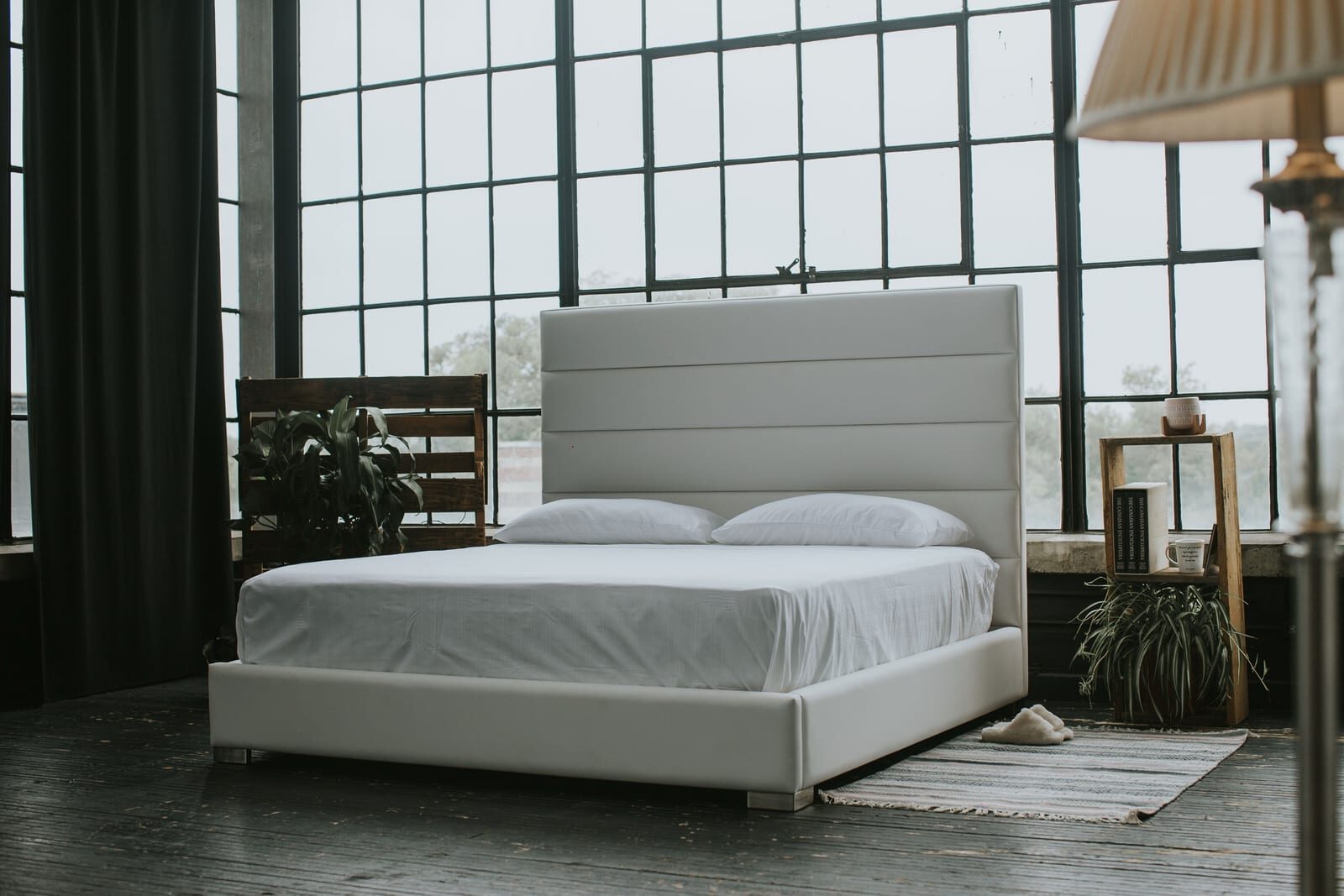
At Maple Zen, that lamplit hour is exactly what we build for. Our flagship Zazen Bed pairs a sturdy solid platform base with a supple vegan leather upholstered frame and a tall, padded headboard made for sitting up against with a book while the snow comes down outside — handcrafted in our workshop in Maple, Ontario. If your bedroom could use a warmer place to land this winter, we would love to help you build it.